
Deemed Rehabilitation Canada Misdemeanor Guide
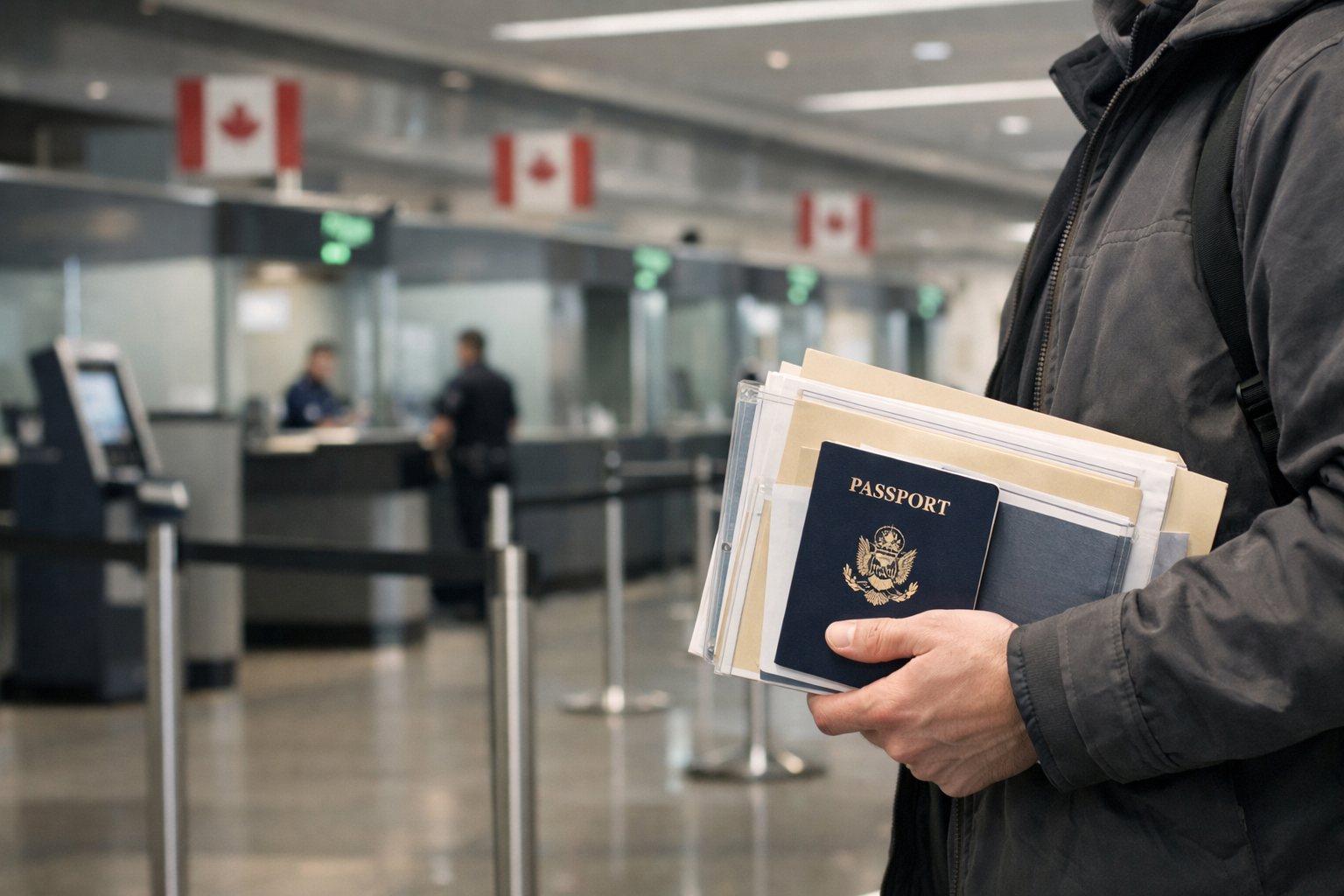
If you are asking about deemed rehabilitation Canada misdemeanor rules, the short answer is that one old U.S. misdemeanor may stop creating inadmissibility concerns in some cases, but not in every situation. Canadian border and immigration authorities may look at the Canadian equivalent of the offence, how serious it would be under Canadian law, whether there was only one conviction or incident relevant to the analysis, and how much time has passed since the sentence was fully completed. Even where a person believes enough time has passed, a U.S. traveler may still be questioned at the border and may need documents to support why they believe they are admissible.
What deemed rehabilitation means in Canada
Under Canada’s immigration law framework, foreign nationals can be found criminally inadmissible if they were convicted outside Canada of an offence that, if committed in Canada, would amount to an offence under Canadian federal law. In some situations, a person may later be treated as rehabilitated through the passage of time. This is commonly referred to as deemed rehabilitation.
For U.S. travelers, this issue often comes up after a single misdemeanor conviction from many years ago. An important point is that the Canadian government does not simply rely on the U.S. label of “misdemeanor” or “felony.” Instead, officers generally compare the foreign offence to the closest Canadian equivalent. Because of that, a U.S. misdemeanor can still create criminal inadmissibility issues if the Canadian equivalent is treated seriously enough under Canadian law.
Deemed rehabilitation is different from applying for individual criminal rehabilitation. It is also different from requesting a temporary resident permit. If deemed rehabilitation applies, a person may be admissible without submitting a separate rehabilitation application. Even so, the assessment is fact-specific and depends heavily on the available records, so many travelers still prepare carefully before trying to enter.
If you are unsure whether you qualify, it may help to review broader options for criminal rehabilitation and temporary resident permits before making travel plans. You should also compare any general information you read online with current guidance published by IRCC and CBSA.
When one old misdemeanor may lead to deemed rehabilitation
Many people search for can I enter Canada with one misdemeanor because they have heard about a 10-year rule. That idea may be relevant in some cases, but it is often simplified too much.
In general terms, deemed rehabilitation may be possible where a person has only one conviction outside Canada, enough time has passed since the entire sentence was completed, and the offence would not be treated as too serious under Canadian law. For many older offences, travelers focus on whether a substantial period of time has passed since the completion of all parts of the sentence, not just the date of arrest or conviction. Whether the commonly mentioned 10-year concept applies depends on the offence and the Canadian equivalency analysis.
Sentence completion can involve more than paying a fine. Depending on the case, officers may look at when probation ended, when a suspended sentence was satisfied, when restitution was completed, or when any driving prohibition or similar condition ended. If any part of the sentence remained outstanding, the time calculation may not begin when the traveler assumed it did.
A few practical points often matter:
- There generally needs to be only one conviction relevant to the deemed rehabilitation analysis.
- The offence usually must be examined under Canadian law, not just the wording used in the U.S. court.
- The elapsed time is commonly considered from full completion of the sentence.
- Border officers may still ask for records and may not accept a traveler’s personal summary without supporting documents.
For some travelers, the issue is not whether they feel rehabilitated in everyday life, but whether they meet the legal test recognized by Canadian immigration authorities. If there is any doubt, it can be prudent to get an informed legal review before presenting yourself at the border and to confirm the current approach on official IRCC or CBSA sources.
Why the Canadian equivalent offence matters so much
The biggest source of confusion in a U.S. misdemeanor Canada border case is equivalency. Canadian officers usually do not decide admissibility based on the American classification alone. They compare the wording of the foreign statute and the record of conviction to Canadian law.
That means two travelers who both say they have “one misdemeanor” may be treated differently. One offence may line up with a less serious Canadian offence, while another may correspond to a more serious indictable or hybrid offence in Canada. Some offences that sound minor in the United States can carry more significant immigration consequences once translated into Canadian legal terms.
Officers may look at documents such as:
- the charging document or complaint
- the statute of conviction
- the judgment, docket, or disposition record
- the sentence order
- proof that all conditions were completed
They may also consider whether the offence involved violence, property damage, fraud, drugs, weapons, reckless conduct, or impaired driving-related facts. The exact legal elements often matter more than the label used by the local U.S. court.
This is one reason some people are surprised at the port of entry. They believe an old misdemeanor is automatically behind them, but the officer may reach a different view once the Canadian equivalent is considered. Travelers concerned about being stopped may also find it useful to read about whether Americans can be denied entry to Canada, while remembering that final decisions depend on the facts and the officer’s assessment.
Does deemed rehabilitation Canada after 10 years apply automatically?
The phrase deemed rehabilitation Canada after 10 years is common, but “automatic” can be misleading. In many situations, a traveler does not receive a separate certificate in advance confirming deemed rehabilitation. Instead, admissibility may be assessed when the person applies to enter Canada or in another immigration context.
That creates a practical problem. Even if a traveler believes the legal test is met, a border services officer may still ask for documents and may still need to be satisfied that:
- there was only one conviction or one relevant event for the purpose of the analysis
- the offence has the Canadian equivalent the traveler claims
- enough time has passed since the complete sentence ended
- there are no additional charges, findings, or facts that change the picture
So while deemed rehabilitation may arise by operation of law in the right circumstances, proving that you benefit from it can still be an issue. That is especially true if records are old, incomplete, or inconsistent, or if the foreign disposition is difficult to interpret under Canadian law.
It is also important to remember that officers assess the material placed before them and may not agree with a traveler’s self-assessment. If they are not satisfied on the spot, they may refer the matter for further review or conclude that the traveler remains inadmissible. A person in that position may need to consider other possible remedies, such as those discussed in this overview of how to overcome criminal inadmissibility and enter Canada legally. For current procedural information, travelers should check IRCC and CBSA resources directly.
Documents U.S. travelers should carry to the border
If you plan on entering Canada with old conviction issues in your past, preparation matters. Even where deemed rehabilitation may apply, it is sensible to carry a clear package of records. This may help an officer understand the offence, the outcome, and the completion date of the sentence.
Helpful documents may include
- court records showing the exact offence of conviction
- a copy of the statute under which you were convicted, if available
- proof that all fines were paid
- proof that probation, parole, or other supervision ended
- evidence that any treatment, classes, or community service were completed
- government-issued identity documents
- if available, a legal opinion or written explanation addressing Canadian equivalency
Why complete records matter
A short verbal explanation at the border is often not enough when criminal inadmissibility is in issue. Officers generally look for objective proof. If your documents do not clearly show when the sentence was fully completed, or if they leave uncertainty about the nature of the offence, the officer may not accept that deemed rehabilitation applies.
It can also help to be consistent and accurate. Attempting to minimize or hide a conviction can create separate problems. Canadian immigration matters may turn not only on the paperwork but also on how credible and complete the information appears.
Because local court systems vary, some records may be easier to obtain than others. If the file is old or archived, it may take time to gather the necessary documents. Travelers who want to avoid uncertainty at the port of entry often start collecting records well before any planned trip and compare what they have with the document expectations described in official government guidance.
When deemed rehabilitation may not be available
Not every old misdemeanor leads to relief. A person may still face criminal inadmissibility Canada misdemeanor concerns where any of the following applies:
- there is more than one conviction or more than one incident that matters under the legal test
- the Canadian equivalent may be considered too serious
- enough time has not actually passed since full sentence completion
- the court records are unclear, incomplete, or missing
- there are related facts that make the Canadian analysis less favorable than expected
One common example involves impaired driving history. Many U.S. travelers assume a single DUI or similar offence is minor because it was treated as a misdemeanor at home. But impaired driving can have significant immigration consequences in Canada, and travelers should be very cautious about assuming deemed rehabilitation applies without a careful review. For more context, see denied entry to Canada for a DUI.
Another issue is multiple incidents arising close together. Even if a person remembers only “one case,” the official record may show more than one count, more than one conviction, or additional findings that need to be understood. The legal impact depends on the exact outcome and should be verified against the court file and current government guidance.
There can also be uncertainty where the foreign disposition involved diversion, deferred adjudication, a plea arrangement, or an expungement process. Those outcomes do not always translate neatly into Canadian admissibility categories. In those cases, a person should be especially careful about relying on general online summaries.
What to do if you are unsure about your admissibility
If you are not certain whether your old conviction qualifies for deemed rehabilitation, it may be unwise to guess at the border. A careful pre-travel review can reduce the risk of delay, refusal, or a stressful secondary inspection, although it cannot guarantee a particular outcome.
Consider a legal assessment before travel
A licensed Canadian immigration lawyer or RCIC can review the foreign statute, court records, and sentence completion dates to assess possible Canadian equivalency. In some cases, the conclusion may be that deemed rehabilitation likely applies. In others, the safer route may be to explore individual criminal rehabilitation or, for urgent travel, a temporary resident permit if appropriate and available under current policy.
Have a backup plan
If your trip is important, think about what you will do if the border officer is not persuaded. Depending on the facts, some travelers choose to try to resolve admissibility issues in advance rather than leaving everything to a port-of-entry decision. Others may need to postpone travel until stronger documentation is available.
If you want a practical example of how people address these issues, you may also find this article on overcoming criminal inadmissibility helpful as background reading. As always, it is a good idea to compare secondary sources with official IRCC and CBSA materials before making travel decisions.
Frequently Asked Questions
Can I enter Canada with one misdemeanor from the U.S.?
Possibly. One U.S. misdemeanor does not automatically bar entry forever, but it can still make you inadmissible if the Canadian equivalent offence triggers criminal inadmissibility. Officers commonly assess the nature of the offence, the disposition, the sentence, and how much time has passed since the sentence was fully completed.
Does deemed rehabilitation happen exactly 10 years after conviction?
Not necessarily. The timing is often tied to when the entire sentence was completed, not simply the date of conviction. Also, the often-mentioned 10-year concept may not help if the Canadian equivalent offence is too serious, if there is more than one conviction, or if the records do not support the analysis. Current IRCC and CBSA guidance should be checked for up-to-date details.
Will a border officer see my old U.S. conviction?
Canadian border officers may have access to information that leads them to question a traveler about criminal history. Travelers should assume that past convictions could come to light and should answer truthfully. It is generally better to carry records than to rely on the hope that the matter will not be noticed.
What if my offense was expunged or sealed in the United States?
An expungement or sealing order in the United States does not always remove Canadian immigration consequences. Canadian authorities may still assess the underlying offence depending on the legal effect of the U.S. disposition and the records available to them. Because outcomes vary, this should be reviewed carefully before travel.
Do I need to apply for criminal rehabilitation if I think I am deemed rehabilitated?
Not always. If you clearly meet the applicable legal requirements for deemed rehabilitation, a separate criminal rehabilitation application may not be necessary. However, some travelers still seek legal advice and prepare supporting documents because officers may still require proof and may not agree with a self-assessment.
Conclusion
A single old misdemeanor does not always prevent a U.S. traveler from entering Canada, and deemed rehabilitation may be available in some cases. The difficulty is that the answer depends on Canadian legal equivalency, full sentence completion, the seriousness of the Canadian equivalent offence, and the officer’s assessment of the records presented. If you have any doubt about your admissibility, consider speaking with a licensed Canadian immigration lawyer or RCIC before you travel and verify current requirements with IRCC and CBSA.
This article provides general information only and is not legal advice. Immigration and admissibility decisions depend on the facts of each case and should be verified against current IRCC and CBSA guidance.
Latest Immigrations News

July 4, 2024
Denied Entry to Canada for a DUI
Denied Entry to Canada for a DUI? Canada has strict immigration and border security policies, which include rigorous checks on individuals with criminal records. One common reason for being denied entry into Canada is a past conviction for driving under the influence (DUI). Have you been denied entry [...]

July 30, 2020
Criminal Rehabilitation for Inadmissibility Issue to Canada
Criminal Rehabilitation Criminal Rehabilitation is a means whereby an individual with a criminal record seeks permission from the Canadian government for permission to enter Canada and thereby overcome their criminal inadmissibility. Through their conduct, they must demonstrate not only that they have overcome their criminal behavior but also [...]

March 26, 2020
Removal Order from Canada
Authorization to Return to Canada ARC If you have received a removal order from the government of Canada and wishing to return then you may be eligible to apply for Authorization to Return to Canada. Individuals that get removal order can be either due to: Refugee application refused [...]




Book a Conslutation
One of our Representatives will
assist you with your matter. Book Now!
Click here

Call us for
more Information
+1-416-477-2545
Toll Free: 1-877-820-7121
Click here

Write Us (Online Form)
Complete our form and one of our
Representatives will contact you.
Click here

Subscribe To Our Newsletter

 1440 Hurontario St
 Whats App: +1 416-477-2545
 Email: info@thevisa.ca