
Can You Enter Canada With a Dismissed DUI Charge? What Border Officers Look At in 2026

In many dismissed DUI Canada situations, a dismissed or withdrawn charge does not by itself create criminal inadmissibility. Still, it may lead to questions at the border because Canadian authorities may look at more than a final conviction record alone. Officers may assess the available records, the court outcome, and any other relevant facts before deciding whether to allow entry.
- A dismissed DUI is not the same as a conviction.
- Border officers may still see or ask about an arrest, charge, or related record.
- Expunged or sealed records in the U.S. do not always mean the issue will never arise at the Canadian border.
- Honest, consistent answers and clear supporting documents can help.
- Each case is assessed individually under Canadian immigration law and border procedures.
Does a dismissed DUI Canada issue make you inadmissible to Canada?
In many cases, criminal inadmissibility to Canada is connected to conduct that could correspond to an offence under Canadian law. A charge that was dismissed, stayed, withdrawn, or resolved without a conviction is generally different from a finding of guilt.
That said, the practical border question is not always identical to the legal one. A person asking, can I enter Canada with a dismissed DUI, is often really asking two things:
- Could I still be considered legally inadmissible?
- Will the border officer question me or delay my entry because of what appears in available records?
For many travellers, a dismissed DUI alone may not automatically mean the answer to the first question is yes. But it can still trigger closer review at the port of entry. Officers with the Canada Border Services Agency assess admissibility case by case and may examine a traveller more closely where criminal or police history appears.
If there was no conviction, no plea that resulted in another related offence, and no other concerning facts, that may be helpful. But if records are incomplete, if there are multiple alcohol-related incidents, or if the officer believes the documents do not fully explain the outcome, entry can still become more complicated.
Travellers should also keep in mind that officers do not necessarily rely only on a simple summary line from a court docket. They may look at the nature of the allegation, the formal disposition, and whether there is enough reliable information to understand how the case ended.
For broader background on how DUI issues can affect travel, see Denied Entry to Canada for a DUI.
What can CBSA officers see in a dismissed DUI Canada case when you arrive at the border?
Many people are surprised that a withdrawn DUI Canada border issue can come up even without a conviction. At inspection, CBSA officers may have access to information available through border, law enforcement, and government systems, along with the documents and answers you provide. The exact information available in any case can vary, and travellers should avoid assuming that a dismissed file will never appear.
An officer may see or ask about:
- Arrest history
- Charges laid and how they were resolved
- Court dispositions
- Police or enforcement records that are available to them
- Previous border declarations
- Other criminal or driving-related incidents
This is why someone who was arrested for DUI not convicted Canada may still be questioned. The absence of a conviction does not always mean the event will never appear in a database or report. It usually means the legal significance of that event may be different from a conviction.
Expungements, sealing orders, and record-clearing processes can help in some jurisdictions, but they do not always remove every historical trace for cross-border purposes. An expunged DUI Canada entry issue may still arise if the record was previously shared, retained elsewhere, or reflected in related entries.
Rather than guessing about what officers can see, it is usually better to prepare for the possibility that the incident could come up and to be ready to explain it clearly and accurately. If you have a time-sensitive trip or a more complicated history, it may be wise to speak with a licensed Canadian immigration lawyer or RCIC before travel.
For official travel inspection information, review CBSA guidance on crossing the Canadian border.
What is the difference between dismissed DUI Canada, withdrawn, stayed, and expunged records?
These terms are often used loosely, but they do not always mean the same thing. At the border, the exact outcome can matter. If you are dealing with dismissed DUI Canada concerns, try to obtain the formal wording used by the court and, where possible, proof of the final result.
Dismissed or acquitted
A dismissal or acquittal generally means there was no conviction. That is often a more favourable fact than a conviction for Canadian admissibility analysis, although officers may still ask what happened and review the available records.
Withdrawn or stayed
If the prosecution withdrew the charge, or if proceedings were stayed, there may also be no conviction. Still, the matter may remain visible in some systems or documents. A withdrawn matter can create fewer issues than a conviction in many situations, but it may still lead to practical border questions.
Expunged, sealed, or set aside
These terms depend heavily on local law. In some U.S. states, an expungement limits public access but does not necessarily mean every government database or historical entry is erased. A sealed or expunged record may therefore be less visible in everyday life yet still come up in a border or law enforcement context.
Why wording matters
Canadian officers may focus on the actual disposition, not an informal explanation. “It was taken care of” is vague. “The DUI charge was dismissed and the court closed the case without a conviction” is clearer, if that is what the record actually shows.
Bringing paperwork that shows the final outcome can be helpful, especially if the wording in your record could be misunderstood.
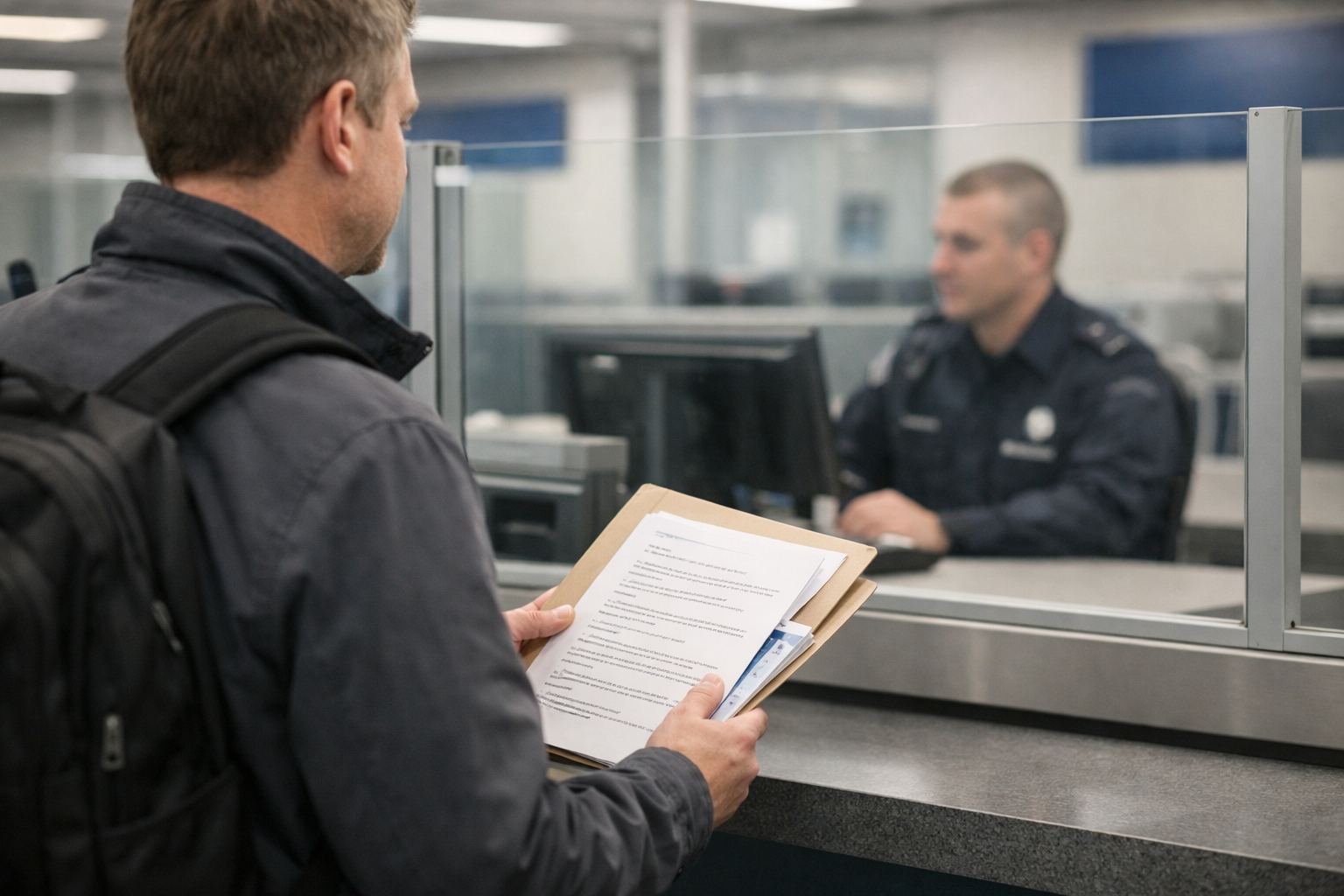
What documents should you carry for a dismissed DUI Canada border question?
If you are concerned about Canada inadmissibility without conviction, organized records can make the border conversation easier to follow. There is no universal package that guarantees entry, but clear documents may help an officer understand your situation more quickly.
Useful documents may include:
- Court disposition showing the charge was dismissed, withdrawn, stayed, acquitted, or otherwise resolved without conviction
- A copy of the charging document, if needed to match the court outcome to the allegation
- A letter from your criminal defence lawyer explaining the procedural history in plain language, where available
- Proof that you completed any conditions tied to the resolution, if applicable
- Valid passport and standard travel documents
Keep the package simple and consistent. If one document says the case was dismissed but another suggests a plea to a lesser offence, you should expect questions. Officers may look for gaps or contradictions when reviewing records.
You should also be prepared to answer basic questions calmly:
- When did the incident happen?
- What were you charged with?
- How did the case end?
- Was there any conviction for another related offence?
Do not hide the incident if asked. Inaccurate or misleading statements to a border officer can create a more serious immigration issue than the original charge history.
If you are unsure whether your paperwork is enough, review general inadmissibility options in Denied Entry to Canada? Here’s How to Overcome Criminal Inadmissibility and Enter Legally.
If there was no conviction in a dismissed DUI Canada matter, do you need a TRP or criminal rehabilitation?
Temporary resident permits and criminal rehabilitation are usually discussed in situations where a person is, or may be, inadmissible because of past criminality. If your DUI charge was dismissed and there was no conviction, you may not need either option. Still, not every file is straightforward.
A temporary resident permit, often called a TRP, may allow entry for someone who is inadmissible but has a reason to travel that an officer or decision-maker accepts. Criminal rehabilitation is a separate process used in some cases involving past convictions. Whether either option is relevant depends on the exact record and the legal characterization of the events.
If there is a genuine risk that an officer could still consider you inadmissible based on available evidence, or because another offence appears in your history, tailored legal advice may be important. For example, some travellers believe the DUI was “dismissed,” but the file may actually show a plea to a related impaired, reckless, or other driving offence. If so, the analysis can change.
For a practical overview, see What is Temporary Resident Permit and Temporary Resident Permit (TRP) and Criminal Rehabilitation. Official guidance is also available from IRCC on temporary resident permits and IRCC on overcoming criminal convictions.
If your travel is important and your record is not perfectly clear, consider seeking advice from a licensed Canadian immigration lawyer or RCIC before going to the border.
How can you reduce dismissed DUI Canada problems at the Canadian border?
No one can guarantee admission to Canada. Even where there appears to be a strong argument that a dismissed DUI does not make you inadmissible, border examination remains fact-specific. The goal is usually to reduce uncertainty and avoid preventable misunderstandings.
Check your own record before travel
Request your court documents and, if appropriate, ask your defence lawyer about the exact outcome. Make sure you understand whether the case was dismissed, reduced, diverted, stayed, or resolved another way.
Do not rely on informal advice
Friends and online forums often say, “You were not convicted, so it does not matter.” That may be too simplistic. The issue is often not just the legal label, but what records exist and how they appear to a CBSA officer during inspection.
Prepare a clear explanation
Keep your explanation short, truthful, and consistent with your documents. Avoid unnecessary detail, but answer direct questions directly.
Watch for other issues in your history
Multiple arrests, prior convictions, prior immigration refusals, or a pattern of alcohol-related driving incidents can change the overall assessment.
Know that U.S. travellers are not exempt from scrutiny
If you are American, read Can Americans Be Denied Entry to Canada?. U.S. travellers can still be questioned carefully about criminal or police history when entering Canada.
For impaired-driving background from the Canadian government, see IRCC guidance on impaired driving. Before travel, it is sensible to verify the current rules and procedures on official government pages because government guidance can change.
Frequently Asked Questions
Can I enter Canada with a dismissed DUI?
Possibly. A dismissed DUI does not automatically mean you are criminally inadmissible. However, CBSA officers may still ask questions about the arrest or charge and review the documents available to them. Entry is never guaranteed.
Will Canada see a DUI arrest even if I was not convicted?
It may. Canadian border officers may have access to some arrest, charge, and court information through border and law enforcement systems. The amount of information visible can vary, so it is safer to assume the incident could come up.
Does an expunged DUI disappear for Canada border purposes?
Not necessarily. An expungement or sealing order may reduce public visibility where the case was handled, but it does not always remove every law enforcement or historical record that could matter at the border. Bringing proof of the final disposition is often sensible.
What if my DUI charge was withdrawn after I completed conditions?
That may be more favourable than a conviction, but the details still matter. Officers may want to know whether there was any plea, any finding by the court, or any conviction for a related offence. Bring the court order and any records showing that the conditions were completed, if available.
Can I be denied entry to Canada without a conviction?
In some situations, yes. Convictions are a common basis for criminal inadmissibility, but officers may assess admissibility on the full record available to them. That is one reason dismissed-charge cases can still be complicated.
Should I get legal advice before travelling?
If the record is unclear, if you have more than one incident, or if the trip is important, legal advice may be sensible. A licensed Canadian immigration lawyer or RCIC can review the documents, identify possible concerns, and help you prepare for border questions.
A dismissed DUI charge often places travellers in a gray area rather than creating a simple yes-or-no answer. If you want a careful review of your court records and possible travel issues before you go, you may wish to speak with a licensed Canadian immigration lawyer or RCIC.
This article is general information only and is not legal advice. Immigration outcomes depend on individual facts, available records, and officer discretion under Canadian law.
Latest Immigrations News

November 5, 2026
Can You Enter Canada With a Reckless Driving Conviction? TRP Options in 2026
Learn when reckless driving Canada issues may cause inadmissibility and when a Temporary Resident Permit may help for work or family travel.

July 4, 2024
Denied Entry to Canada for a DUI
Denied Entry to Canada for a DUI? Canada has strict immigration and border security policies, which include rigorous checks on individuals with criminal records. One common reason for being denied entry into Canada is a past conviction for driving under the influence (DUI). Have you been denied entry [...]

February 22, 2023
Overcoming Inadmissibility to Canada: 3 Different Ways To Follow
Canada receives millions of immigration applications every year. Whether an individual wants to visit Canada to meet his/her family or want to study/work there, they must meet all the eligibility requirements. What if you have a criminal conviction that can trigger inadmissibility to Canada? Well, there are ways [...]



Book a Conslutation
One of our Representatives will
assist you with your matter. Book Now!
Click here

Call us for
more Information
+1-416-477-2545
Toll Free: 1-877-820-7121
Click here

Write Us (Online Form)
Complete our form and one of our
Representatives will contact you.
Click here

Subscribe To Our Newsletter

 1440 Hurontario St
 Whats App: +1 416-477-2545
 Email: info@thevisa.ca