
How has FTA Worked in Favour of Canadian Businesses Seeking Foreign Skilled Labour?

The Canadian government has 15 FTAs (free trade agreements) with more than 50 nations, which has opened a vast avenue for skilled labour integration. Businesses based in Canada can benefit from the expertise of foreign workers. But to recruit them, the business owner has to show probable cause to the Canadian government. Through a positive LMIA, they can hire foreigners for job roles. Let’s explore how FTA has streamlined this workforce integration.
Free Trade Agreements by Canada
Foreign Trade Agreements or FTAs are trade deals between Canada and another country or region. These agreements lower barriers to trade and investment, making it easier for Canadian companies to do business abroad. The Canadian government has entered into multiple FTAs with other countries, such as:
- Canada-United States-Mexico Agreement (CUSMA) previously known as NAFTA or North American Free Trade Agreement with the USA and Mexico.
- Comprehensive Economic and Trade Agreement (CETA) with countries of the European Union.
- Comprehensive and Progressive Agreement for Trans-Pacific Partnership (CPTPP) with Brunei, Japan, Chile, Mexico, New Zealand, Australia, Malaysia, Vietnam, Peru, and Singapore.
- General Agreement on Trade in Services (GATS) with all member nations of the World Trade Organization.
There are other FTAs as well, but these are the most significant free trade agreements that Canada is a part of. Citizens of these countries can be expedited work permits based on the FTAs with Canada.
Advantages of Leveraging FTAs for Canadian Businesses
There are many benefits to leveraging FTA when seeking foreign skilled labour. For businesses, it can help to reduce costs and speed up the process of integrating new employees into the company. It can also help to boost your business by providing access to a wider pool of potential employees. Let’s take a look.
- It provides a streamlined process for businesses to obtain necessary work visas for foreign workers through LMIA. This can save businesses both time and money when compared to the traditional immigration process. In addition, FTA allows businesses to recruit from a larger pool of potential employees, which can help to improve your chances of finding the right candidate for the job.
- FTA can be a helpful tool for businesses seeking foreign skilled labour. Reducing costs and simplifying the visa process, can make it easier for businesses to integrate new employees into the company.
- It allows for the recognition of foreign credentials and work experience, which is a major advantage for businesses seeking skilled labour from abroad. The agreement also allows for the free flow of goods, services, and investment between Canada and the EU, making it easier for businesses to set up operations in Canada.
The ability to hire foreign workers with the specific skills and experience that your business needs can be a major competitive advantage. With the FTA in place, businesses can leverage this opportunity to gain a significant edge over their rivals.
Examples of FTA Facilitating Skilled Foreign Labour
Let’s take a look at specific instances of FTAs and how they help in foreign skilled labour integration.
CETA
The Canada-European Union Comprehensive Economic and Trade Agreement (CETA) has made it easier for Canadian companies to hire highly skilled workers from Europe. CETA includes a Mutual Recognition Agreement that allows Canadian companies to recognize the professional credentials of workers from Europe. This means that a Canadian company can more easily hire a European worker with the skills they need, without having to go through a lengthy and costly credential recognition process.
CUSMA
The Canada-United States-Mexico Agreement (CUSMA) also includes provisions that make it easier for businesses to access foreign markets for skilled labour. For example, CUSMA includes a Professional Mobility Chapter that allows professionals with certain qualifications to work in any of the three countries for up to three years. This chapter also establishes a process for recognizing the professional qualifications of workers from other countries.
Additionally, many FTAs include investor-state dispute settlement mechanisms that give businesses greater certainty and predictability when operating in foreign markets. These mechanisms provide businesses with an avenue to resolve disputes with foreign governments outside of the court system, which can be costly and time-consuming.
Conclusion
Overall, FTAs can be beneficial for businesses seeking to access foreign markets for skilled labour. They only have to apply for LMIA and get a positive response from the IRCC to start recruitment and we can help with that.
Akrami & Associates is a leading immigration law firm with a team of experienced lawyers and consultants, dedicated to helping business owners in Canada apply for LMIA. We also help foreign skilled workers to get a work permit so they can come and work in Canada. Reach out to us for any details regarding our immigration services. Call us at (416) 477-2545 or drop us a mail at info@thevisa.ca.
Latest Immigrations News

October 22, 2026
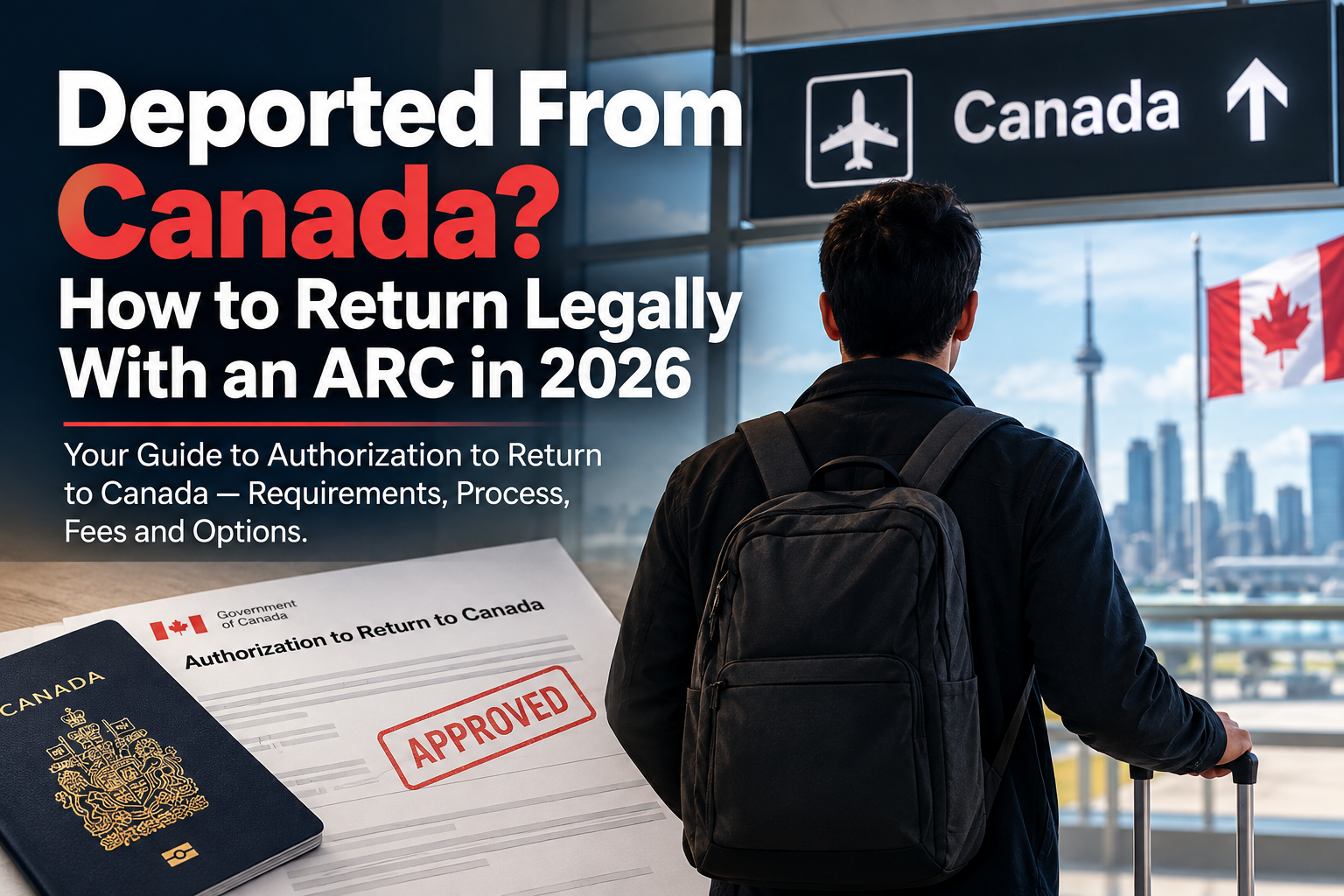
Deported From Canada? How to Return Legally With an Authorization to Return to Canada (ARC) in 2026
Being deported from Canada does not necessarily mean you can never return. However, individuals who have received a Canadian deportation order generally require an Authorization to Return to Canada (ARC) before they can legally return. An ARC application allows Canadian immigration authorities to consider whether someone who was [...]
August 10, 2026
Lost Your Canadian Permanent Residency? Here’s How to Restore It Legally
Lost Your Canadian Permanent Residency? Here's What You Can Still Do in 2025 Canada is known for offering stability, world-class healthcare, education, and a high quality of life, which is exactly why losing your Canadian permanent residency can feel like a devastating setback. But here’s the truth: [...]
June 26, 2026
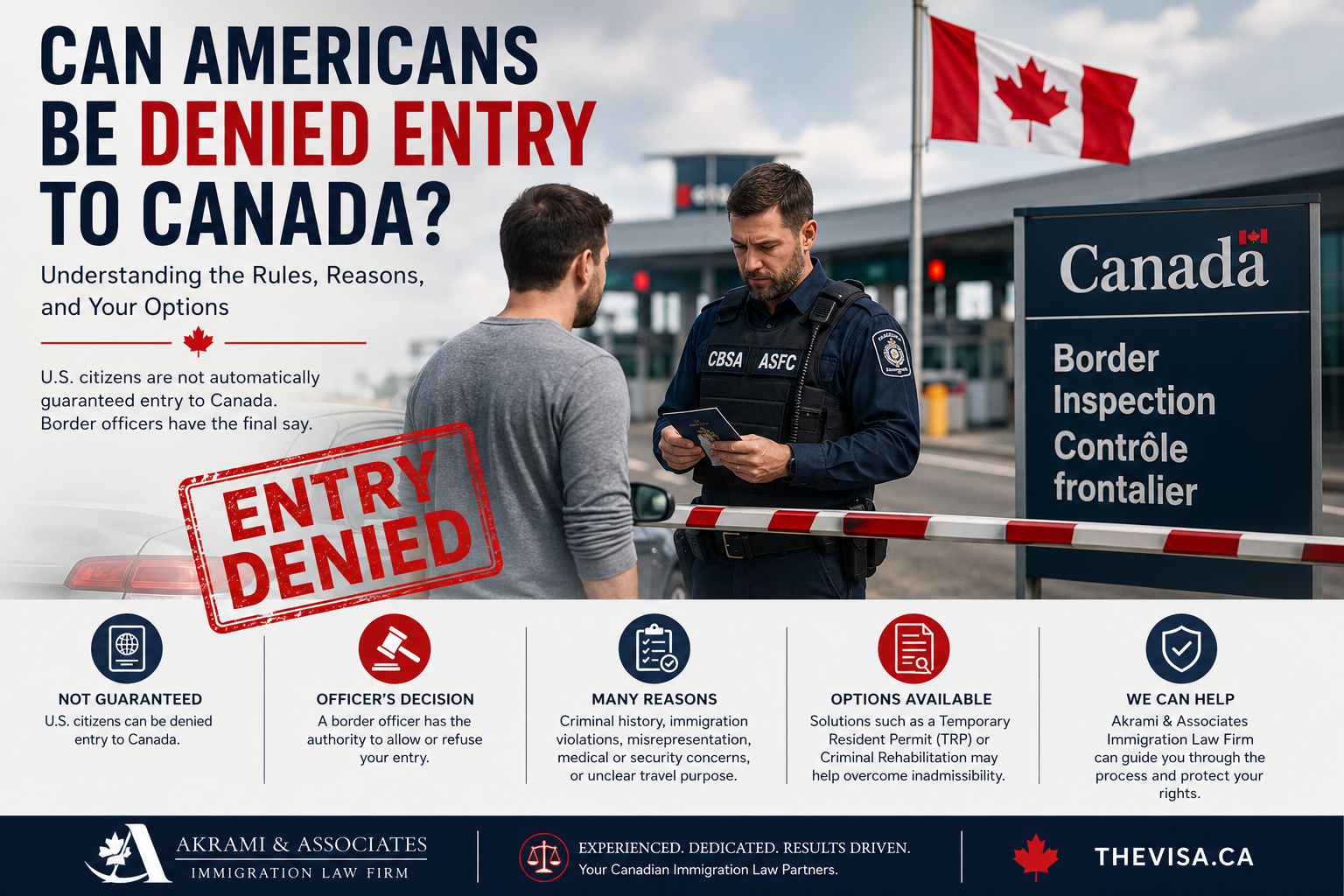
Can Americans Be Denied Entry to Canada?
Can Americans Be Denied Entry to Canada?Yes, Americans can be denied entry to Canada. Although United States citizens are visa-exempt for many short visits, entry into Canada is never automatically guaranteed. Admission is still decided by a Canadian border services officer at the airport, land border, or other [...]


Book a Conslutation
One of our Representatives will
assist you with your matter. Book Now!
Click here

Call us for
more Information
+1-416-477-2545
Toll Free: 1-877-820-7121
Click here

Write Us (Online Form)
Complete our form and one of our
Representatives will contact you.
Click here

Subscribe To Our Newsletter

 1440 Hurontario St
 Whats App: +1 416-477-2545
 Email: info@thevisa.ca